Which Robo-Advisor Wins for Beginners?

SoFi Invest and Betterment both court the same investor: someone who wants to start automated investing without a large balance or a lot of hands-on management. Both now charge the same headline fee — 0.25% annually — which means the decision isn’t really about price. It’s about what that 0.25% actually buys you at each platform, and the two diverge more than the matching fee suggests.
Quick Verdict
- Choose SoFi Invest if: you’re an existing or prospective SoFi banking customer, want a complimentary session with a certified financial planner, and are starting with a smaller balance.
- Choose Betterment if: you want tax-loss harvesting on a taxable account, lower-cost underlying funds, or more portfolio customization as your balance grows.
- Skip both if: you specifically need tax-loss harvesting on a large taxable balance — Wealthfront currently offers the deepest version of that feature (see our tax-loss harvesting comparison).
Side-by-Side: The Core Numbers
| SoFi Invest (Automated Investing) | Betterment | |
|---|---|---|
| Management fee | 0.25% annually | 0.25% (Basic), 0.65% (Premium) |
| Account minimum | $50 | $0 |
| Underlying funds | SoFi-branded ETFs | Broad mix of low-cost ETFs across asset classes |
| Tax-loss harvesting | Not offered | Yes, on all taxable accounts |
| Human advisor access | Complimentary CFP session; unlimited with SoFi Plus | Available on Premium tier ($100,000 minimum) |
| Portfolio customization | Limited — no individual ETF selection | More flexible — can tilt toward value, income, ESG, and more |
| Best for | Beginners, SoFi banking customers | Taxable-account investors, those who want more portfolio control |
Where SoFi Invest Wins
SoFi’s biggest practical advantage is accessibility: a $50 minimum is low enough that almost anyone can start, and if you’re already banking with SoFi, the automated investing account integrates directly with those existing accounts and goals. The complimentary 30-minute session with a certified financial planner — unlimited with SoFi Plus — is a genuinely useful perk for a beginner who has questions before committing more money.
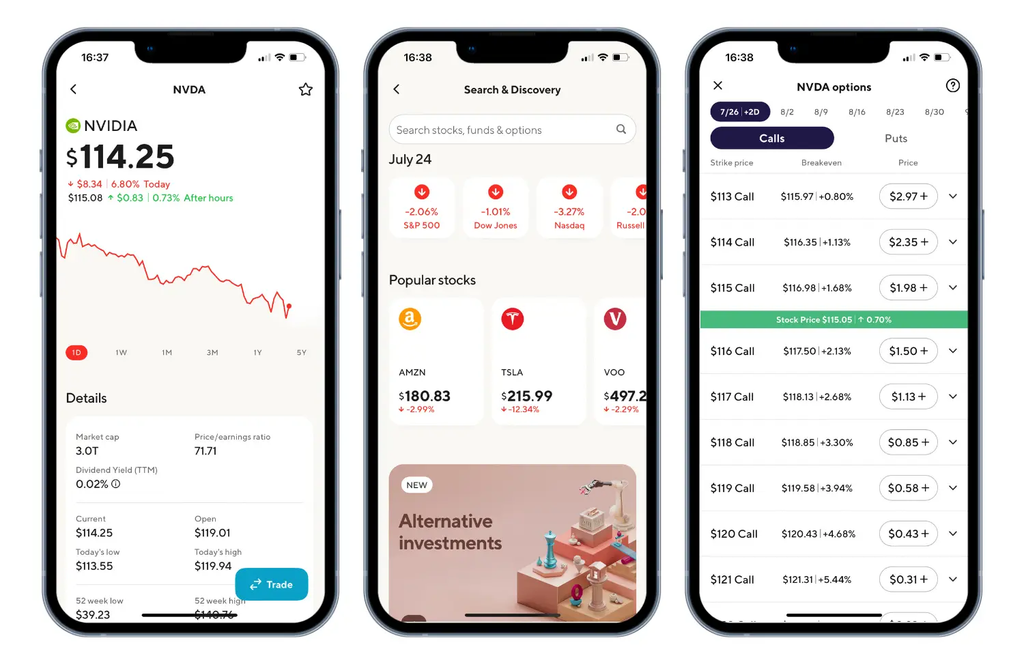
The catch worth understanding: SoFi builds its automated portfolios using SoFi-branded ETFs, which tend to carry meaningfully higher expense ratios than the funds used by competitors like Fidelity Go or Betterment. On a small account, that difference is a few dollars a year and barely registers. As your balance grows, the gap between SoFi’s fund costs and a lower-cost competitor’s becomes more noticeable — worth revisiting once your balance climbs into the tens of thousands.
Where Betterment Wins
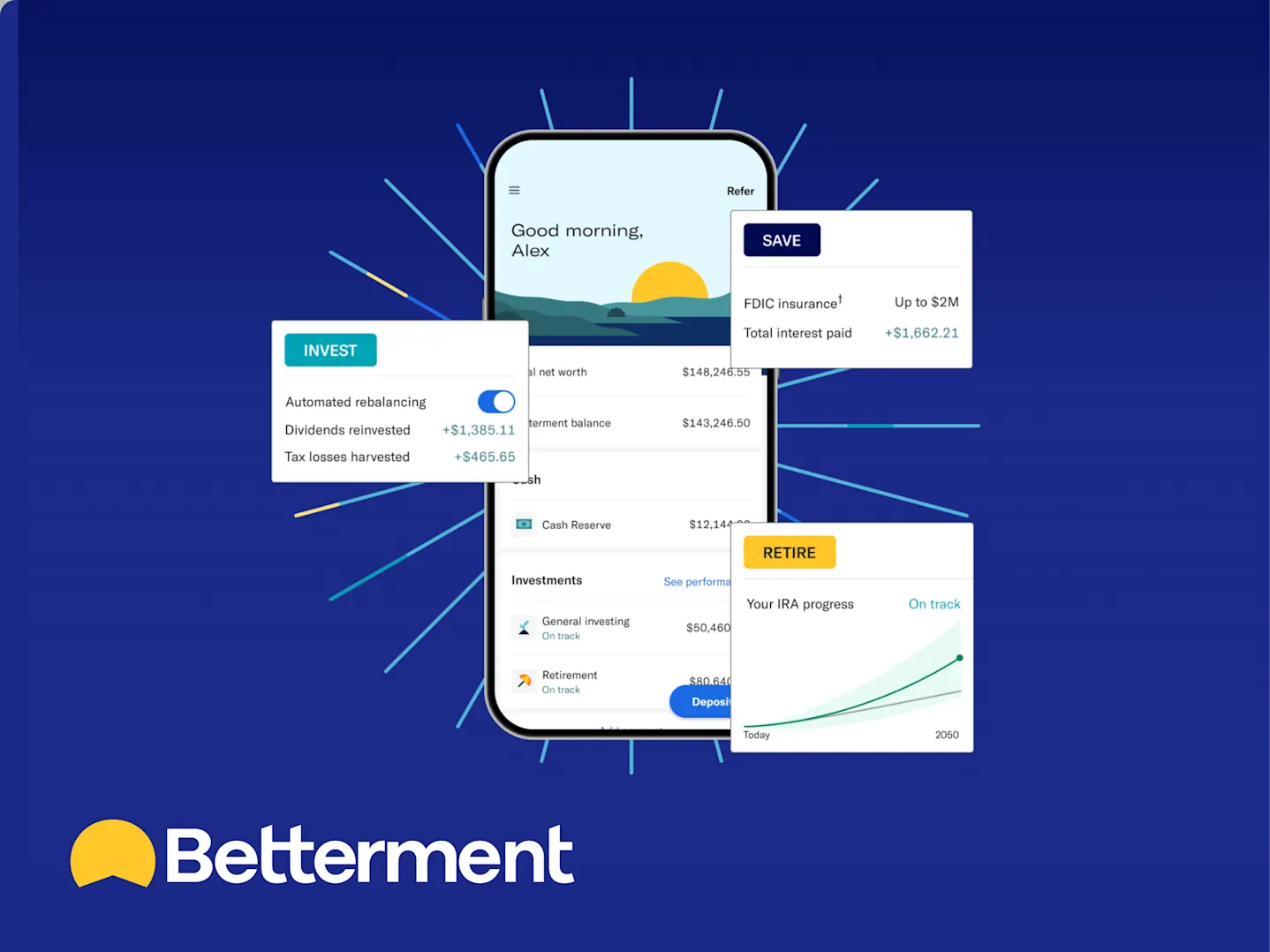
Betterment’s 0.25% fee buys you two things SoFi doesn’t offer at all: automatic tax-loss harvesting on all taxable accounts, with no minimum balance, and meaningfully more portfolio customization. If your $10,000–$50,000 is sitting in a regular taxable brokerage account rather than an IRA, Betterment’s tax-loss harvesting can offset part or all of that 0.25% fee in a volatile year — a benefit SoFi simply doesn’t provide at any balance.
Betterment also gives you more room to shape your portfolio — tilting toward value stocks, income-generating assets, or socially responsible investing options — within the guardrails of a professionally built allocation. SoFi’s approach is more fixed: you’re placed into one of a small number of pre-built portfolio categories with less room to adjust.
The tradeoff is Betterment’s $0 minimum comes with less hand-holding than SoFi’s included CFP session — human advisor access on Betterment requires the Premium tier, which needs a $100,000 balance most beginners won’t have yet.
Which One Fits Your Situation
You’re brand new to investing and want a person to talk to before committing: SoFi’s complimentary CFP session is hard to match at this fee level, and the $50 minimum keeps the barrier to entry low.
Your money is going into a taxable brokerage account, not an IRA: Betterment’s tax-loss harvesting is a real advantage SoFi doesn’t offer at all — worth the identical 0.25% fee on its own.
You’re already a SoFi banking customer: the integration between SoFi’s banking and investing products is a genuine convenience that’s hard to quantify but easy to feel day to day.
You expect your balance to grow well beyond $25,000–$50,000: Betterment’s lower-cost underlying funds and more flexible portfolio construction tend to matter more as the account grows, while SoFi’s higher fund expense ratios become a larger drag in dollar terms.
Our Methodology
This comparison is based on fee schedules and feature disclosures published directly by SoFi and Betterment, current as of 2026. Fee structures for both platforms have changed in recent years — SoFi introduced its current 0.25% management fee in November 2024, up from $0 — so always confirm current terms directly on each provider’s website, since promotional pricing and fee schedules can shift without much notice. We do not maintain active accounts with either platform for this specific comparison; treat this article as a starting point for your own research.
Frequently Asked Questions
Does SoFi Invest offer tax-loss harvesting? No. This is one of the clearest differences between the two platforms — Betterment offers it on all taxable accounts, SoFi does not offer it at all.
Is SoFi Invest good for IRA investing? It can be, particularly since tax-loss harvesting doesn’t matter in an IRA anyway — that removes Betterment’s main structural advantage for IRA-only investors.
Which platform has lower fund costs? Betterment generally uses lower-cost underlying ETFs across the board. SoFi’s SoFi-branded funds tend to carry higher expense ratios, a difference that becomes more noticeable as your balance grows.
Do I need $100,000 to talk to a human advisor at either platform? At Betterment, generally yes — human advisor access requires the Premium tier. At SoFi, a complimentary CFP session is included at a much lower balance, which is one of its clearest advantages for newer investors.
This article is for informational and educational purposes only and does not constitute personalized financial or investment advice. Fees, minimums, and features change frequently — always confirm current terms directly on each provider’s website before opening an account. This post may contain affiliate links; see our affiliate disclosure for details.